


Ten years after moving to Sint Jansteen, the St. Paul factory is undergoing a spectacular transformation. The new factory will be operational in early 2027, combining technology, automation and craftsmanship to create a unique complex. This visionary project combines forty years of knowledge and experience in one place: the Factory of the Future. This is a factory that is ready for future generations.
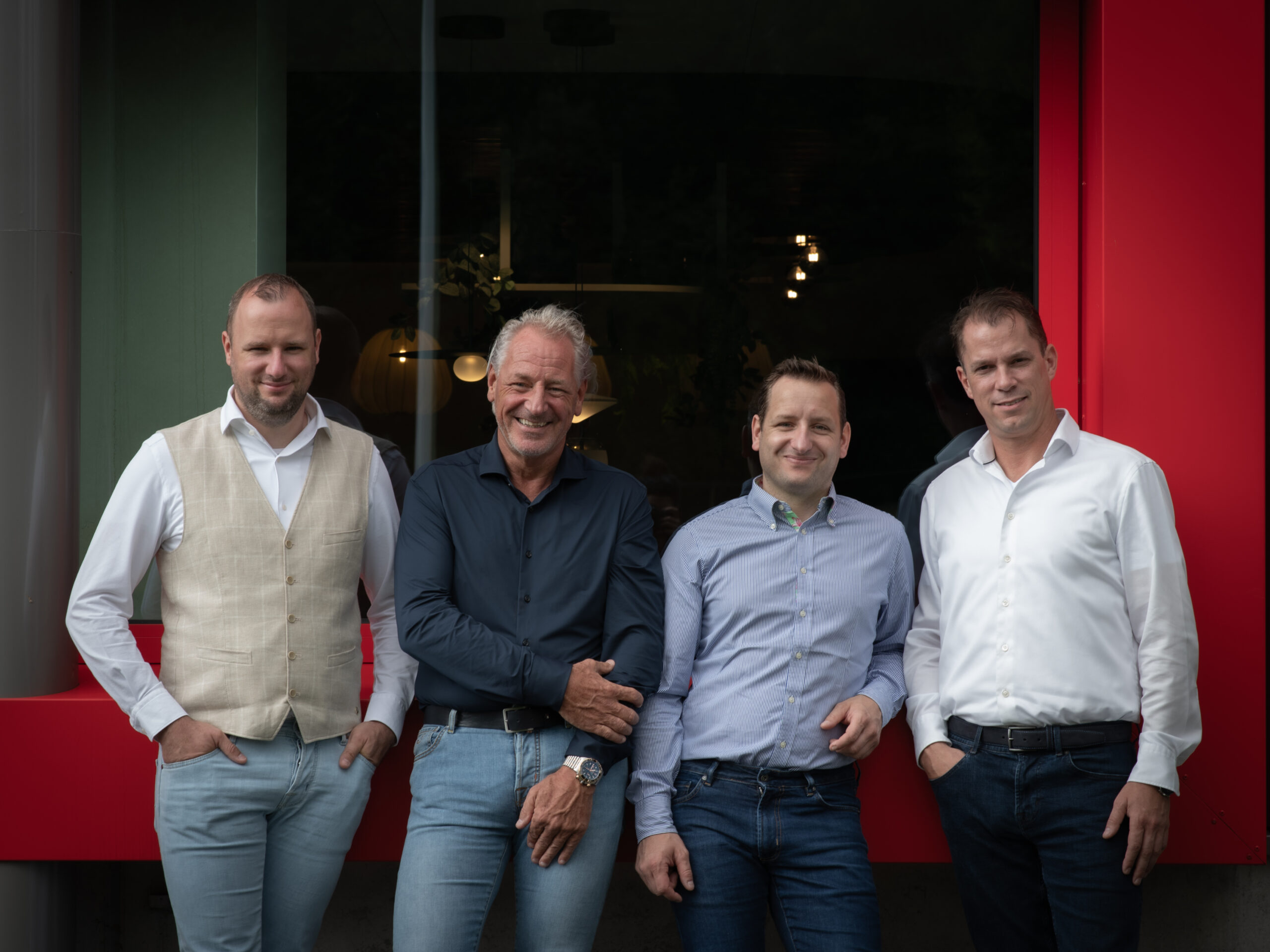
The project team consists of Samuel Verheggen (plant manager in Lokeren), Tim Kuijl (project manager), Wim Kuijl (production manager) and Dieter Kuijl (CEO). They are enthusiastic about this development. Dieter: “We want to further improve the consistent quality that is the hallmark of St. Paul, and respond to growing demand. That is why we are investing in a new, ultra-modern factory. We are using our own processed cheese factory in Lokeren as an example; it is still very advanced for its time and has a capacity of 10,000 kilograms of processed cheese per hour. In St. Jansteen, we are now building a factory with a capacity of 25,000 kilograms per hour, more than double that of our existing facility. This will make it the largest processed cheese factory in the Benelux region and it will be equipped with in-house developed technologies. Efficiency and reducing our ecological footprint are the most important criteria here. We are committed to making a positive impact. This will be achieved not only through production, but also through heat and cooling recovery, reducing our CO2 emissions, combating product waste, and saving energy, among other things.”
Where knowledge and robots converge
Tim: “There are plenty of companies that have built natural cheese or mozzarella factories, but processed cheese factories are rare. The knowledge about this often remains internal. It’s a specialized field.” Samuel continues: “Developing a new factory is a long process. We have been working on this for ten years. Taking into account the technologies available on the market and our knowledge of machines and engineering, we conducted our own research. The aim was to determine whether certain technologies could be applied in the new factory. We then discussed with a large number of colleagues whether it was a good idea. Step by step, the design of the new factory took shape.” Everything in the new factory will soon be fully automated. Wim: “Everything will be controlled from a single control room. The cheese will travel hundreds of meters: robots will unpack it, place it in the correct grinding machine, send it to the melting machine, pump it to the packaging lines, cool it, and prepare it for transport.”
Consistent quality
Dieter explains that, in the new factory, the functions of the machines are even more precisely tailored to the recipes. “Everything happens at the right time and in the right way. The quality control system remains St. Paul’s flagship feature. Smart sensors monitor consistent quality based on parameters such as speed, time, temperature, and chemical composition. This means we always know that the product meets the highest standards, allowing us to work more efficiently. Since we are measuring continuously, we can reduce checks at other times.”
Broader range
In addition to consistent quality, the new factory also offers more production possibilities. Wim: “We can use other techniques to create a wider range. In addition to pasteurization, we can sterilize and produce shelf-stable products that can be stored outside of refrigeration. This opens doors for the further expansion of our cheese sauces for the B2B market, for example. Special mixing techniques, such as high and low shear, also expand our range. These techniques will further develop the range of enzymatically produced natural cheese flavors (EMC). In general, we will soon be able to respond even better to trends such as the growing demand for vegan and vegetarian food. However, our number one priority in building this factory remains consistent quality.”
From offices to a cheese experience!
“In addition to a brand new production line for processed cheese, the new factory has much more to offer,” Tim says. “The project also includes a new head office, canteens, a steam boiler house, workshops for technical services, and a building for water treatment and fire extinguishing systems. There will also be a new production office overlooking the production line, with a research and development department underneath. New silos and a steam boiler will also be installed on the site.” The project team is also proud of the new experience corridor: a glass walkway above the production line where visitors can observe the production of processed cheese and cheese solutions without disrupting the process.
From plan to production
Before the Factory of the Future is up and running, there are still quite a few steps to be taken. Samuel: “We have a comprehensive commissioning plan that specifies exactly how we will test, validate and start up the new machines. From preparation to delivery. For example, the machines will first be tested with water before we start testing with cheese, after which the entire delivery can take place.” Tim: “The plan also describes how we will train colleagues in all the new technologies. Manufacturers provide training courses and we develop our own training programs. Everyone is very committed; everyone wants to see the new factory in operation, so the training will certainly be successful.” Dieter: “The great thing is that the factory in Lokeren will continue to operate. This means we are under no pressure to deliver immediately and can start up at our own pace. Few companies that are innovating have that advantage.”
Looking to the future
With just a few steps left in the commissioning plan and the factory under construction, the four are already looking ahead. Wim: “With the arrival of our new factory, we are strengthening our position in Europe and gaining even more clout.” “And now it’s mainly a matter of protecting our silverware,” says Dieter. “By staying close to ourselves, doing what we’re good at and staying focused. You also have to be able to lose, show resilience and make sure you always remain liquid. For me, these are core principles that will remain important for the future.” According to him, a new phase is dawning: “We are becoming less hunters and more farmers. We must cherish what we have, give it time to grow and harvest what we have built up. And those who cherish well allow the most beautiful flavors to mature!”